
How Much Space Do You Need for a Pilates Reformer at Home?
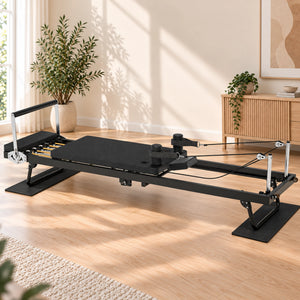
A Pilates reformer can bring studio-style training into your home, but before choosing a machine, there is one very practical question to answer: Do you actually have enough space for it?
The answer is not based on the reformer's dimensions alone. You also need to think about the room required to move comfortably during exercises, access the machine, and — if you choose a foldable model — store it between sessions.
A little planning before you buy can make the difference between a reformer that fits naturally into your home and one that makes the room feel crowded.
Think About Three Types of Space
When planning for a home reformer, it helps to separate your space requirements into three different areas.
Reformer Footprint
The actual length and width of the reformer when it is fully set up for training.
Training Space
The additional room around the reformer needed for getting on and off and performing exercises comfortably.
Folded Space
If your reformer folds, consider where it will live after your workout and how easily it can be moved there.
Do not measure only the machine itself. A good home setup considers training space, movement space, and storage space together.
Start With the Reformer’s Unfolded Dimensions
Every reformer has a defined length, width, and height when fully assembled. These measurements give you the minimum physical area required for the equipment itself.
Length is usually the most important dimension to check because reformers are long pieces of equipment. Width matters too, especially if you are placing the machine beside a bed, desk, sofa, or walkway.
Before purchasing, mark the reformer's dimensions on your floor with painter's tape or another removable marker. This simple step can help you understand how much of the room the machine will actually occupy.
The Machine Fits — But Can You Move Around It?
One of the most common mistakes when planning for a reformer is checking only whether the machine itself fits between the walls.
Pilates exercises may involve arms or legs extending beyond the edge of the carriage, side-facing movements, standing work, or transitions beside the machine.
You also need enough room to get on and off the reformer comfortably without squeezing between furniture.
A room that technically fits the reformer may still feel too tight for training. Leave comfortable movement space around the machine rather than planning wall-to-wall.
How to Measure Your Room Before Buying
You do not need a complicated floor plan. A few simple measurements can tell you whether a reformer will work comfortably in your home.
Which Rooms Can Work for a Pilates Reformer?
A home reformer does not always require a dedicated gym. The best room depends on how you use your home and whether the machine needs to remain set up all the time.
Living Room
Often one of the largest open areas in the home. A foldable reformer can make this setup easier when you want to reclaim the room after training.
Bedroom
Can work when there is enough open floor area beside or beyond the bed and the reformer does not block normal movement through the room.
Home Office
A practical option if the room has clear floor space and your desk area can remain separate from the training zone.
Spare Room
Gives you more flexibility to create a semi-dedicated Pilates area while still allowing the room to serve other purposes.
Fixed vs. Foldable Reformers: How Storage Changes the Equation
A traditional fixed reformer requires enough permanent floor space for the machine to remain fully assembled.
That can be ideal if you already have a dedicated Pilates room or home gym. The machine stays ready for use and does not need to be moved between workouts.
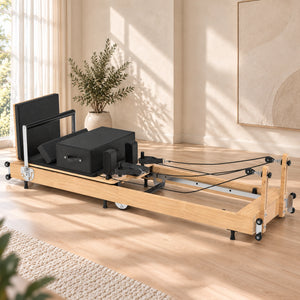
A foldable reformer can work differently. You still need enough room for the reformer while you train, but you may not need to dedicate that same amount of floor space to the machine all day.
This is especially useful in multipurpose rooms where the same floor area may also be used for working, relaxing, entertaining, or everyday living.
How Much Storage Space Does a Foldable Reformer Need?
Foldable does not mean invisible. The reformer still needs a safe and practical place to be stored.
Before buying, check the machine's exact folded dimensions and compare them with the wall, corner, or storage area you intend to use.
Also think about orientation. Some reformers store vertically, while others fold into a shorter but wider shape.
If the reformer includes transport wheels, consider whether there is a clear path between your workout area and storage position.
Planning Space for Pilena Home Reformers
Looking at real product measurements can make space planning easier. Here are two examples from Pilena's foldable home reformer range.
Flex F22
When planning for the F22, measure both the full training area and the location where you intend to keep the reformer after folding.
Explore Flex F22 →Gaia X1
Gaia X1 also reduces its footprint when folded, making it easier to plan around a home environment that serves more than one purpose.
Explore Gaia X1 →Common Space-Planning Mistakes
Can You Put a Pilates Reformer in a Small Apartment?
It can be possible, but careful planning matters more in a smaller space.
Instead of asking only whether the reformer physically fits, think about whether the room will still function comfortably before, during, and after your workout.
A foldable reformer can be particularly useful in this situation because the training zone can return to everyday use after the machine is stored.
- Choose the clearest and longest section of floor.
- Avoid blocking main walkways.
- Measure the folded machine before choosing a storage location.
- Keep enough room to move safely around the reformer.
- Consider whether the reformer can be moved easily after each workout.
Home Reformer Space FAQ
Can a Pilates reformer fit in a bedroom?
Yes, if the room has enough clear floor space for the reformer and comfortable movement around it. Make sure the machine does not interfere with the bed, doors, closets, or normal walkways.
Can I put a reformer against a wall?
The reformer may be positioned near a wall depending on the room and your exercises, but you should still consider how much side and end clearance your movements require.
Is a foldable reformer better for a small space?
A foldable reformer can make a small or multipurpose room easier to manage because the machine can occupy less space between workouts. However, you still need enough room for the reformer when it is fully set up.
Should I measure my room before buying?
Yes. Measure both your training area and, for a foldable reformer, your intended storage location before purchasing.
Plan for Your Workout — Not Just the Machine
The amount of space you need for a Pilates reformer depends on more than the equipment's length and width.
A comfortable home setup should give you enough room for the reformer, your movements, and everyday access around the room.
If your home needs to stay flexible, a foldable reformer can make space planning easier by allowing the training area to return to everyday use after your workout.
Measure first, think about how you actually use the room, and choose a reformer that fits both your Pilates routine and your home.
Find a Reformer That Fits Your Home
Explore Pilena foldable reformers designed to bring smooth Pilates training into modern living spaces.
Explore Pilena Reformers
